Daytona Beach had an estimated 88,471 residents on July 1, 2025, up 21.8% from the 2020 census and 45% since 2010, the Census Bureau says.
Last checked Oct. 8, 2026. Every figure on this page comes from the U.S. Census Bureau and is linked to the table it came from. Questions about Census data: the Census Bureau’s customer line, 1-800-923-8282. This page is updated when the bureau publishes new figures.
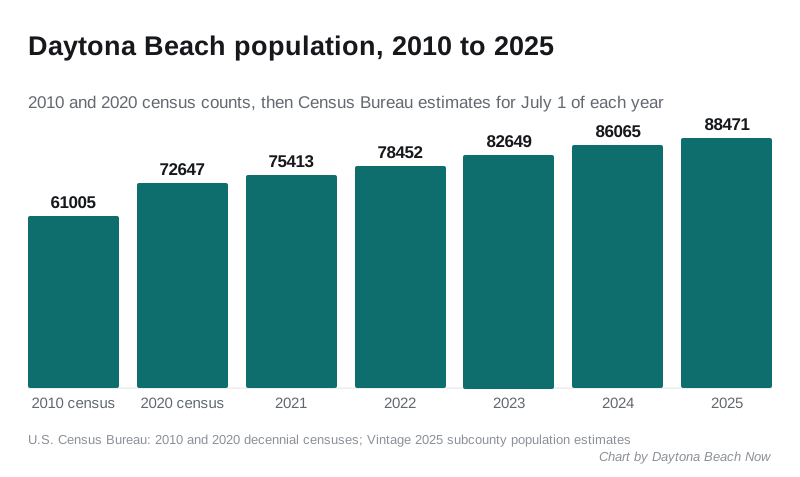
Daytona Beach had an estimated 88,471 residents on July 1, 2025, according to the Census Bureau’s Vintage 2025 city and town population estimates. That is 15,824 more people (21.8%) than the 2020 census count of 72,647 and 27,466 more (45%) than the 2010 census count of 61,005. The Census Bureau’s QuickFacts page for Daytona Beach summarizes the latest figures.
Where the numbers come from
- Population counts and estimates: Census Bureau population estimates and the 2010 and 2020 censuses
- Age, income and housing: American Community Survey, 2020-2024 five-year estimates
- Census Bureau help line: 1-800-923-8282
Daytona Beach’s population since 2010
| Year | Population | Type |
|---|---|---|
| 2010 | 61,005 | Census count, April 1 |
| 2020 | 72,647 | Census count, April 1 |
| 2021 | 75,413 | Estimate, July 1 |
| 2022 | 78,452 | Estimate, July 1 |
| 2023 | 82,649 | Estimate, July 1 |
| 2024 | 86,065 | Estimate, July 1 |
| 2025 | 88,471 | Estimate, July 1 |
The city grew 19.1% in the decade to 2020 and has added people faster since: about 3,000 to 4,200 a year from 2021 to 2024 and 2,406 (2.8%) in the year to July 2025. Daytona Beach is now home to about 15% of Volusia County’s residents.
Source: Census Bureau, Vintage 2025 subcounty population estimates for Florida. The estimates start from a 2020 base of 71,589, slightly below the census count, so the 2020 count and the 2021 estimate are not measured the same way.
Age, households, income and housing
These figures come from the American Community Survey 2020-2024 five-year estimates, which average five years of survey responses. The survey’s total for the city, 78,992, is lower than the 2025 estimate because it averages 2020 through 2024.
| Measure | Daytona Beach | Volusia County | Florida |
|---|---|---|---|
| Median age | 40.3 years | 46.5 years | 42.6 years |
| Households | 34,652 | 241,881 | 8,752,810 |
| Average household size | 2.08 | 2.33 | 2.51 |
| Median household income | $52,058 | $70,044 | $74,568 |
| People below the poverty line | 20.4% | 11.8% | 12.6% |
| Adults 25+ with a bachelor’s degree or higher | 27.8% | 28.4% | 34.1% |
| Housing units | 42,158 | 282,109 | 10,256,470 |
| Owner-occupied homes | 47.5% | 73.7% | 67.6% |
| Renter-occupied homes | 52.5% | 26.3% | 32.4% |
| Median value, owner-occupied home | $287,700 | $313,000 | $359,000 |
| Median gross rent | $1,328 | $1,467 | $1,669 |
Tables: DP05 (age), DP02 (households, education), DP03 (income, poverty) and DP04 (housing).
Daytona Beach is younger than the county around it, has lower household incomes and is more of a renters’ city. Of the three places in the table, it is the only one where renters outnumber owners.
How Daytona Beach compares with Volusia County and its neighbors
| Place | 2010 census | 2020 census | 2025 estimate | Change since 2020 |
|---|---|---|---|---|
| Daytona Beach | 61,005 | 72,647 | 88,471 | +21.8% |
| New Smyrna Beach | 22,464 | 30,142 | 33,182 | +10.1% |
| Volusia County | 494,593 | 553,543 | 606,573 | +9.6% |
| South Daytona | 12,252 | 12,865 | 13,894 | +8.0% |
| Port Orange | 56,048 | 62,596 | 66,395 | +6.1% |
| Ormond Beach | 38,137 | 43,080 | 44,692 | +3.7% |
| Holly Hill | 11,659 | 12,958 | 13,268 | +2.4% |
| Daytona Beach Shores | 4,247 | 5,179 | 5,187 | +0.2% |
Sources: 2010 and 2020 census counts (2020 P1), Vintage 2025 estimates. Daytona Beach has grown faster since 2020 than the county and every neighboring city, including New Smyrna Beach, about 14 miles south.
Why the numbers differ
A census is a full count every 10 years. The annual estimates update it with births, deaths, moves and new housing, and are revised each year. The American Community Survey is a sample, published as five-year averages for a city this size, so its figures carry a margin of error; data.census.gov shows it next to each figure.
What this means for you
- Daytona Beach has about 88,500 residents and is adding roughly 2,400 to 4,200 a year.
- Household incomes are lower than the county’s, and most homes are rented.
- For home values, see our home prices page, which uses monthly market data.
Related: home prices, schools and moving to Daytona Beach.
Frequently asked questions
What is the population of Daytona Beach, Florida?
The Census Bureau estimates Daytona Beach had 88,471 residents on July 1, 2025. The 2020 census counted 72,647.
How fast is Daytona Beach growing?
Daytona Beach grew 21.8% between the 2020 census and the July 2025 estimate, adding 15,824 people, faster than Volusia County (9.6%) and every neighboring city.
What is the median household income in Daytona Beach?
$52,058, according to the Census Bureau’s 2020-2024 American Community Survey, compared with $70,044 for Volusia County.
What is the population of Volusia County?
The Census Bureau estimates Volusia County had 606,573 residents on July 1, 2025, up 9.6% from the 2020 census count of 553,543.
Do more people rent or own in Daytona Beach?
More rent. About 52.5% of occupied homes in Daytona Beach are renter-occupied and 47.5% owner-occupied, according to the 2020-2024 American Community Survey.
Have your say